
Older Single-Story Home TV Mounting in Costa Mesa
TV Mounting Square Costa Mesa covers TV mounting in the single-story houses built across Costa Mesa from the 1950s on — College Park, Halecrest, Mesa Verde and older Eastside streets — where plaster or early drywall, remodeled and original rooms side by side, and an enclosed breezeway or two all call for a probe hole before any bolt goes in.

Bookings aren't open yet. Leave your name and number; your message is recorded, and you'll get one message when a local installer is available.
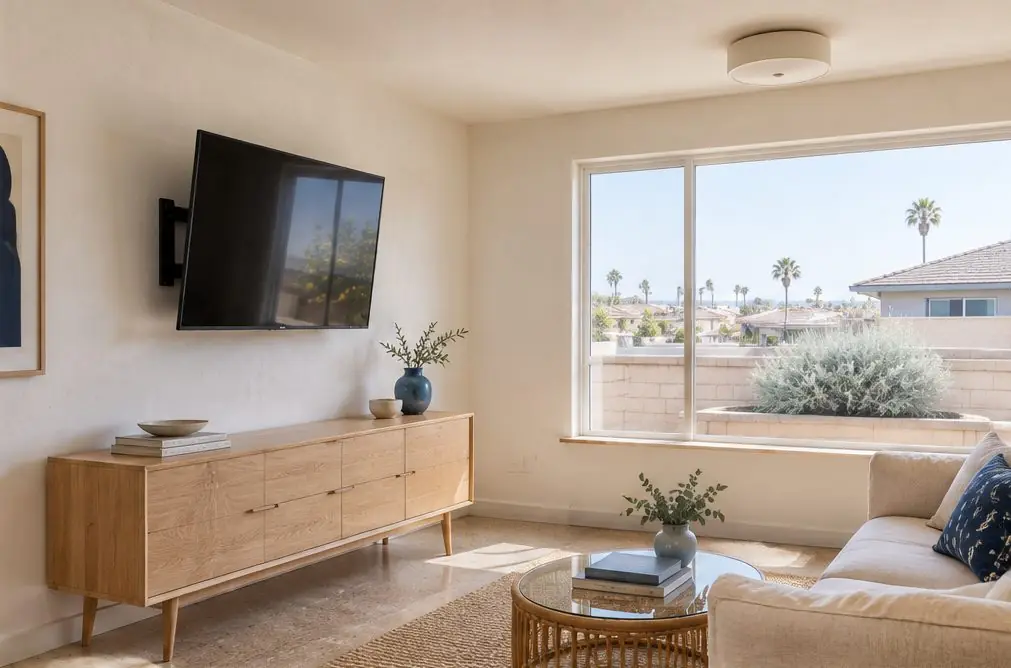 Illustration
Three walls under one roof
Costa Mesa grew quickly after incorporation in 1953; the census counted about 37,500 residents in 1960 and about 72,700 in 1970. The houses from that stretch are low, single-story and often much changed. A single one can carry original plaster over wood lath, early drywall hung when the tract went up, and newer board in a kitchen or family room that was opened up later.
The three drill and sound differently, and a stud finder cannot tell them apart. The installer knocks, looks for old patch lines and makes a small probe hole in the area the plate will cover.
Where plaster slows the work and adds to the price
Plaster is hard and brittle, and it breaks away at the edge of a hole made in a hurry. The method is slower: tape over each spot, a carbide bit at low speed, and lag bolts long enough to cross plaster and lath and still bite into the stud.
| Wall | Typical in | Fixing |
|---|---|---|
| Plaster over wood lath | Original rooms in 1950s houses | Long lag bolts into the studs |
| Early drywall | Rooms finished when the tract was built | Lag bolts into the studs |
| Newer drywall | Remodeled kitchens and family rooms | Lag bolts into the studs |
The estimator adds $25–$45 for plaster, which pays for the slower method.
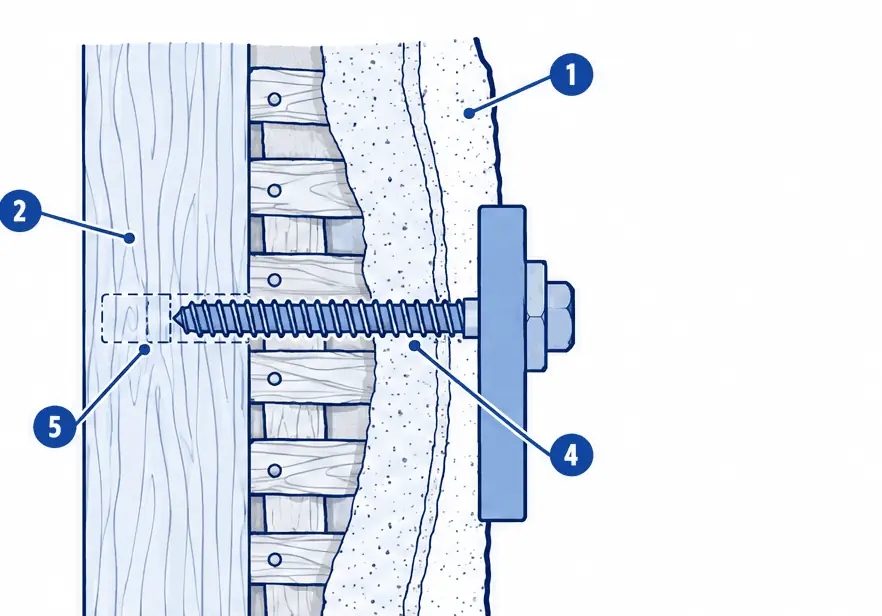
What the numbers show
- Plaster coat A hard, brittle layer that works as a finish; it cannot hold a bracket alone.
- Lath strip Narrow wood strips nailed across the studs key the plaster to the frame.
- Stud behind The wood stud behind the lath is where the plate is fixed.
- Long lag bolt The bolt is long enough to cross plaster and lath and still bite well into the stud.
- Pilot hole The hole is started slowly so the plaster around it does not crack or break away.
Breezeways, garages turned family rooms and low ceilings
Some 1950s plans put a breezeway between the house and the garage, and many owners have since enclosed it. The enclosed space can have different framing from the rest of the house, so it gets its own probe hole rather than assumptions.
Low ceilings pull the screen height down. The center of the picture is settled from the sofa's eye line with tape on the wall, then checked against the distance to the ceiling, never copied from a rule of thumb.
Paint, texture and older homes
In homes built before 1978, paint can contain lead, and some older textured ceilings and joint compound contain asbestos. A few mounting holes disturb very little, but cutting a wall open for hidden wiring, or drilling a textured ceiling, is a bigger question; owners planning that kind of work in an older home can have the material tested first. Dust from drilling is caught at the hole with a vacuum or a dust shroud, and the area is cleaned afterward.
Older Single-Story Home TV Mounting — common questions
Do the 1950s houses here have plaster walls?
Many do in part. Original rooms can be plaster over lath or early drywall, and remodeled rooms are newer board, so each wall is checked on its own.
Can cords be hidden in an old plaster wall?
Cutting plaster for cords leaves a patch that rarely matches the surface, so a paintable raceway to the existing outlet is the usual choice.
Availability & price range
Older Single-Story Home TV Mounting: check availability and price range
Bookings aren't open yet — answer a few quick questions about the TV and the wall and get a typical Costa Mesa price range right here. Typical Costa Mesa prices for one TV, labor only unless an option says otherwise. This is a market estimate, not a quote.